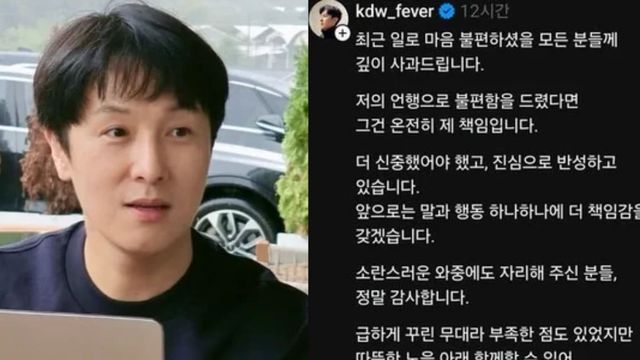
The Catalyst: Personal Views on Socially Sensitive Issues
A member of a first-generation renowned idol group sparked significant controversy by expressing personal views on socially sensitive topics through their social media. The remarks were so provocative that even long-time fans expressed shock, and as time passed, the controversy continued to escalate. After recognizing the problematic situation and removing traces of the posts, the celebrity released a new statement, but public reaction remains overwhelmingly negative.
On the 17th, the celebrity posted on an online community forum arguing that instead of simply conducting enforcement operations in entertainment districts nationwide, society should acknowledge reality and manage the situation systematically. When another user presented the necessity of legalizing prostitution with historical evidence, they even displayed a composed attitude by requesting more detailed explanations.
Dangerous Logic Framed as Disease Control
A particularly concerning aspect of the controversial remarks was responding to objections against legalizing prostitution by citing disease control as justification. They expanded their argument about the necessity of thorough management and showed no willingness to reconsider their position. This series of comments clearly revealed how recklessly a celebrity with a long entertainment career approached such a socially sensitive issue.
The remarks were interpreted as approaching sex work merely from a disease management perspective, which appeared to avoid acknowledging sex work as a human rights issue. The public expressed greater disappointment at how a seasoned entertainer approached such a sensitive topic without any meaningful deliberation.
Account Closure and Rapid Response
As critical public opinion spread rapidly, the celebrity decided to urgently close the problematic social media channel. The explicit remarks from an established entertainer who had been active since their debut elicited profound disappointment from the public, and even their fanbase turned away. Criticism poured in that the light-handed response demonstrated a complete failure to understand the seriousness of the matter.
However, traces of the remarks remain on various platforms including search engine results and online communities, suggesting the controversy will not easily subside. The account closure alone cannot reverse the already widespread discussion and criticism.
Controversy Over Dodging Responsibility and Misplaced Arguments
Two days later, on the 19th, the celebrity reappeared on social media and posted a lengthy personal statement pointing out the harms of hate culture. They strongly criticized the current online culture where people express anger toward one another under the shield of anonymity and hinted at classifying this as cyberbullying.
They emphasized the need for a society where people take responsibility for their words and argued that real-name verification systems should be considered to prevent the negative effects of anonymity. However, this argument was interpreted as criticizing the public who raised objections rather than offering direct apologies for their own reckless remarks that initially sparked the controversy. Ultimately, this came across as dodging responsibility for their careless behavior and blaming the system instead, deepening public fatigue and disappointment.
Expanding Controversy and Future Outlook
This incident has become a case study demonstrating how important responsible behavior in online spaces is, transcending mere celebrity commentary controversy. It clearly revealed the severity of losing trust and fan support built over years of activity in a single moment, and the subsequent response only further exacerbated the problem.
Experts are emphasizing the weight of social influence that public figures' statements carry and the importance of a responsible attitude. In particular, it has been noted that approaching sensitive social issues without meaningful understanding or attempting to evade responsibility afterward results in rapidly losing public trust.
This content is general information compiled based on publicly available materials. Please verify the exact details through official announcements from relevant organizations.