Drunk Driving Hit-and-Run and Measurement Obstruction Allegations: Legal Issues in Actor Lee Jae-ryong's Case Explained
인포바이브 편집팀|입력 2026.03.16 03:00|0
사진 출처: 온라인 커뮤니티
Circumstances of the Incident and Questionable Actions
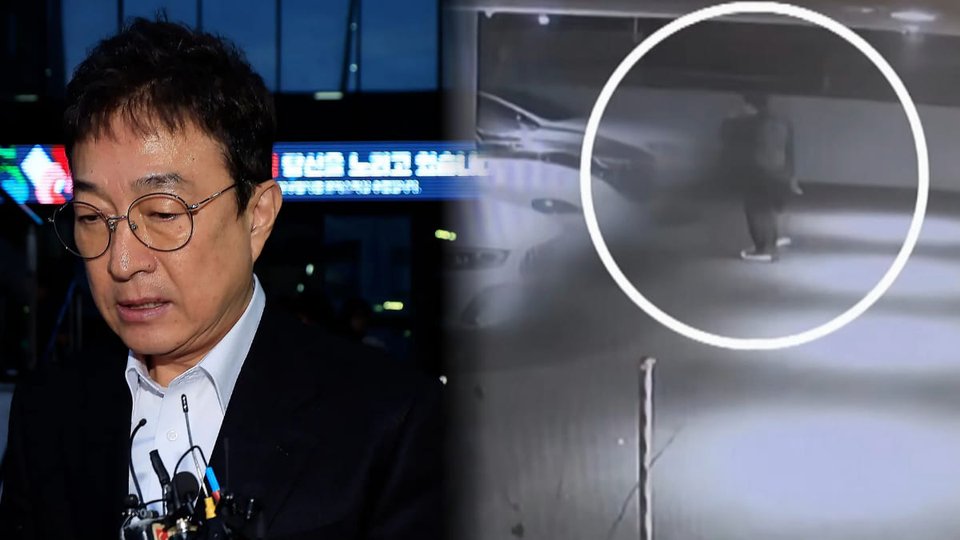
Actor Lee Jae-ryong is reported to have left the scene after causing a traffic accident near Cheongdamyeok Station in Gangnam-gu on the evening of the 6th. The main incident involved colliding with a central divider, which became the starting point for police investigation. Shortly after the accident, Lee Jae-ryong parked his car in a residential area and immediately moved to a nearby restaurant. According to police investigation results, he drank distilled spirits and other alcoholic beverages there with acquaintances.
This behavioral pattern has attracted particular attention because he engaged in drinking immediately after leaving the scene. Police suspect that this series of actions may have been intended to deliberately conceal his blood alcohol concentration. This could constitute intentional legal violation rather than simple negligence.
Lee Jae-ryong's side claims that "he had no idea he had caused an accident and simply went to a previously scheduled meeting place." This stance completely denies intent and is expected to become a core issue in legal disputes. The following section examines how this case connects with the legal concept of 'drinking to beat the test.'
Legal Definition of 'Drinking to Beat the Test' and Measurement Obstruction
'Drinking to beat the test' refers to intentionally obstructing blood alcohol concentration measurement after drunk driving. This typically includes leaving the scene immediately after an accident to buy time, or consuming additional alcohol to increase the reading at the time of measurement. Police determined that Lee Jae-ryong's act of drinking at a restaurant after the accident is a typical example of this tactic.
Legally, 'measurement obstruction' is subject to much heavier penalties than simple drunk driving. While drunk driving itself is punished based on blood alcohol concentration at the time of driving, if intentional measurement obstruction is determined, additional criminal charges can be added. This is viewed as active obstruction in the law enforcement process.
For measurement obstruction charges to be proven in Lee Jae-ryong's case, the circumstances of leaving the scene, time elapsed, and additional drinking must be proven intentional. Police are expected to have secured considerable evidence on this matter, but whether it will be recognized in court is a separate issue. The following section addresses the complexity of proving drunk driving allegations.
Scientific Basis and Complexity of Proving Drunk Driving
To prove drunk driving, it must be demonstrated that blood alcohol concentration at the time of driving was at least 0.03%, the license suspension threshold. This becomes the basic legal standard, and punishment for drunk driving can only be imposed when this level is exceeded. Lee Jae-ryong himself admitted to consuming four shots of soju before the accident, but whether this reached 0.03% is a separate matter.
The situation becomes more complex due to additional drinking after the accident. Because he drank at a restaurant shortly after the accident, the measurement taken by police may include additional alcohol not reflecting his condition at the time of driving. This becomes a major obstacle in calculating his exact blood alcohol concentration at the time of driving. Police plan to use the 'Widmark formula,' a scientific retrograde calculation method, to address this issue.
The Widmark formula is a method of calculating blood alcohol concentration at a specific point in time based on the type and amount of alcohol consumed, the person's body weight, and time elapsed since drinking. While this is a scientifically recognized method worldwide, it cannot guarantee perfect accuracy due to significant individual variations. For example, the same amount of alcohol can result in different readings depending on metabolism speed, constitution, and whether one has eaten.
Supreme Court precedents show that the Widmark formula tends to be applied favorably to defendants. This means courts tend to place more weight on objective circumstantial evidence and measurement records than on figures calculated through this formula. How objective and certain circumstantial evidence police secure will likely determine legal success or failure. The following section examines new legislation that may apply to this case.
Introduction of the 'Kim Ho-joong Prevention Act' and Strengthened Penalty Provisions
The key reason this Lee Jae-ryong case receives special attention is the potential applicability of the revised Road Traffic Act, dubbed the 'Kim Ho-joong Prevention Act.' This amendment was enacted following musician Kim Ho-joong's drunk driving case to severely punish attempts to evade drunk driving detection through drinking to beat the test. It includes much stricter penalty provisions compared to the existing Road Traffic Act.
If measurement obstruction through drinking to beat the test is proven, penalties can include imprisonment for one to five years or fines up to 20 million won. This is a significantly harsher level compared to typical drunk driving penalties. In particular, imprisonment begins at a minimum of one year, meaning actual prison sentences are possible, not just fines. The purpose of this legislation was to actively block techniques used by drunk driving offenders to evade measurement.
Another reason Lee Jae-ryong's case garners attention is the possibility that it could become the first actual case where the strengthened 'Kim Ho-joong Prevention Act' is applied. If the court determines his actions constituted intentional measurement obstruction, it would become the first practical application of this new law and serve as precedent for similar future cases. Police are currently concentrating investigative efforts on proving intentional circumstances to evade measurement, beyond merely establishing that he drank.
Legal experts assess that this case could become important precedent determining the interpretation and scope of the new legislation. As drunk driving detection evasion has become a social issue, prosecutors and police are demonstrating active willingness to punish it. The final section summarizes the outlook and social significance of this case.
Analysis of Core Legal Issues
The most important issue in the legal dispute of Lee Jae-ryong's case is 'proving intent.' From the perspective of prosecutors and police, leaving the scene immediately after the accident and then drinking at a restaurant is clear evidence of intent. However, Lee Jae-ryong's side argues this was coincidence and claims he simply went to a previously scheduled meeting place. Which of these two positions is accepted in court will be the critical turning point in the case.
Police have considerable methods available to prove intent. First is reviewing the reasonableness of leaving the scene. Whether the collision with the central divider was serious enough for Lee Jae-ryong to recognize, or whether it was so minor or unclear that he couldn't perceive it will be examined. Second is analyzing movement routes and timing. The distance from the accident location to the restaurant, time required, and whether actions during that period can be consistently explained will be scrutinized. Third is eyewitness testimony and CCTV video analysis. Whether scene witnesses observed the accident and whether Lee Jae-ryong was aware of surrounding circumstances can be verified.
Police are also expected to review Lee Jae-ryong's typical behavioral patterns. Whether the restaurant was truly a pre-arranged meeting place and whether acquaintances there actually knew in advance that they would meet can be confirmed. If these objective evidences are appropriately supported, the likelihood of measurement obstruction charges being recognized in court increases significantly.
However, Lee Jae-ryong's defense counsel is expected to argue that circumstantial evidence alone is insufficient and that intent cannot be recognized without clear evidence. The court must judge between these two positions to determine which argument is more reasonable and supported by objective evidence. The following section addresses the broader social significance this case may have.
Entertainment Industry Impact and Social Discussion on Drunk Driving Countermeasures
Lee Jae-ryong is known to have maintained a relatively clean image as a veteran actor. This makes this incident even more shocking socially, and concerns are high within the entertainment industry. Beyond the actor's legal responsibility, discussions are taking place on how this might affect celebrity image and public trust.
More broadly, this case may also prompt reconsideration of Korea's drunk driving problem. The severity of intentional measurement evasion and how to more effectively detect and punish it may deepen legal and social discussion. The effectiveness of the already-enacted 'Kim Ho-joong Prevention Act' is also expected to be evaluated.
Considerable time is expected before the court's final verdict. During that process, prosecutors' evidence presentation, Lee Jae-ryong's legal response, and continued media and public interest are anticipated. The outcome of this case has a high probability of becoming important precedent for how similar drunk driving allegations will be handled in the future.
Legal Conclusion and Future Development
At this point, it is difficult to clearly predict the legal direction of Lee Jae-ryong's case. For measurement obstruction charges to be proven, intent must be clear, and drunk driving allegations require accurate blood alcohol concentration figures. How convincingly the objective evidence presented by police and prosecutors is accepted in court is crucial.
If measurement obstruction is proven, sentences up to five years imprisonment are possible, and if drunk driving allegations are also proven, even harsher penalties are possible. Conversely, if Lee Jae-ryong's claims are accepted, punishment levels could be much lower. This is also why this case receives significant social attention.
In the process of the court's ruling, clues about which direction Korea's drunk driving punishment system will develop are also expected to emerge. In particular, whether the 'Kim Ho-joong Prevention Act' actually functions effectively and where its interpretation scope extends will become clear. This is expected to play an important role in determining how similar cases will be handled in the future.
This content is general information compiled based on publicly available materials. Please verify accurate details with official announcements from relevant agencies.