Daejeon Factory Fire Tragedy: A Comprehensive Overview of Safety Management and Workplace Culture Issues Revealed by Internal Testimonies
인포바이브 편집팀|입력 2026.03.23 09:30|0
사진 출처: 온라인 커뮤니티
Daejeon Factory Fire Tragedy: A Complex Background Beyond a Simple Accident
The recent fire at an auto parts factory in Daejeon left numerous casualties and deeply shocked our society. This tragic incident, which resulted in 74 casualties, has brought to light complex issues that go beyond a simple industrial accident. Initially, the focus was on determining the cause of the fire, but as time passed, testimonies from internal sources began to suggest that chronic safety management failures and a distorted workplace culture were underlying factors in the accident.
There is a growing consensus that this tragedy was not merely an accidental fire sparked by a single ember, but rather a 'foreseeable man-made disaster' resulting from problems accumulated over a long period that erupted all at once. In particular, the criticism that management's usual attitude and perception of safety are not unrelated to this large-scale damage calls for deep reflection on the overall safety systems in industrial sites across our society.
Based on the internal testimonies raised concerning the Daejeon factory fire tragedy, InfoVibe aims to comprehensively summarize the issues of inadequate safety management and workplace culture identified as the fundamental causes of the accident. Let's delve into the background and context to understand what truly led to such a profound tragedy.
Controversy Over Management's Verbal Abuse and Personal Insults Revealed by Internal Testimonies
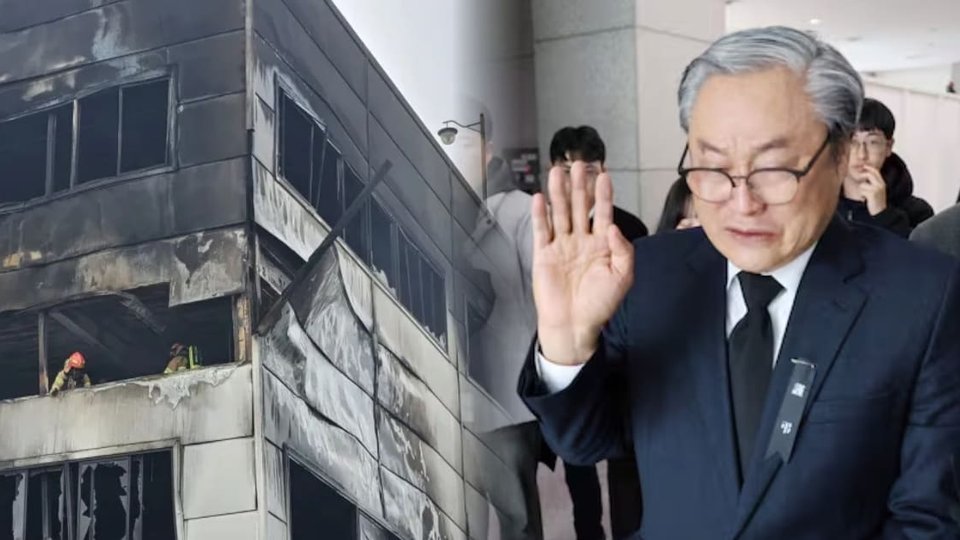
After the fire, allegations have surfaced, causing a significant stir, that the company's CEO, who bowed his head and shed tears before the victims' families, habitually subjected employees to verbal abuse and personal insults. It is reported that internal video footage and numerous employee testimonies reveal scenes of the CEO reprimanding employees with shouting and profanity.
An employee, who requested anonymity, stated that they had to endure the CEO's harsh language daily during their years at the company. It is reported that shocking and extreme remarks were made routinely, such as "These ******* are doing crazy things," "Get out of here, you *******," along with insulting expressions like "You're not even worth the money to flush the toilet after using it," "The electricity bill for your computer is a waste," and "Don't come in tomorrow." Even more extreme statements like "If you have no thoughts, you should just die, why live?" were allegedly uttered without hesitation.
Such an overbearing attitude and personally insulting language are known to have severely deteriorated the workplace atmosphere, extending beyond mere personal issues. According to insiders, some team leaders resigned consecutively, unable to tolerate the CEO's abusive language, and some employees chose parental leave, even risking resignation, due to the poor internal environment. It is highly probable that this ultimately weakened the organization's core capabilities and negatively impacted overall operational systems, including safety.
Chronic Safety Management Failures and the 'Foreseeable Man-Made Disaster'
According to employee testimonies, there are many criticisms that outdated equipment and an inadequate safety management system, identified as one of the fundamental causes of the accident, were also neglected due to management's indifference. One employee's lament that they had experienced "over 30 large and small fires" since joining the company suggests just how chronic the safety issues at the factory were.
In particular, the fact that fire alarms went off at least once or twice a month, yet the system relied on office workers, not trained professionals, rushing to the scene to check, clearly highlights the flaws in safety management. This carries the risk of missing the golden hour for initial response during a fire or exacerbating damage due to inappropriate reactions.
The dust collection equipment, also identified as a major cause of the accident, was an outdated system over 15 years old, yet it reportedly did not receive regular maintenance or cleaning. Furthermore, claims that the CEO showed a lukewarm attitude and allowed these demands to fizzle out, despite the union repeatedly requesting environmental improvements, suggest that safety issues are directly linked to management's safety complacency, going beyond mere equipment obsolescence. The accumulation of these circumstances has led to an internal sentiment that this major tragedy was "an accident waiting to happen."
Management's Autocratic Decision-Making and the Shadow of Safety Complacency
Internal sources unanimously state that, given the company's atmosphere, it was difficult for anything to proceed without the CEO's approval. This autocratic decision-making structure likely prevented safety and environmental suggestions from being properly discussed or implemented. One employee mentioned that the CEO "had little interest in safety and environmental suggestions" and that arbitrary work directives exacerbated confusion on site.
This management style leads to safety management systems becoming mere formalities, preventing necessary actions from being taken promptly on site. In an environment where employees find it difficult to voice safety concerns or where their opinions are disregarded, potential hazards are inevitably neglected. This ultimately creates a vicious cycle where small issues accumulate and lead to major accidents.
Consequently, the Daejeon factory fire tragedy can be summarized as a case demonstrating the profound impact of management's leadership and corporate culture on safety, which cannot be simply attributed to equipment issues or worker error. It starkly illustrates what tragedies can occur when the understanding that safety is an investment, not a cost, fails to take root throughout an organization.
Post-Accident Response and the Challenge of Assigning Responsibility
After the tragedy, the factory's CEO visited the joint memorial altar for the victims, offered condolences, and repeatedly expressed his apologies to the bereaved families. He reportedly bowed his head, choked up, and said, "I have nothing to say. I am sorry to the bereaved families." While such a public apology may be the least expected in a tragic situation, considering the internal issues raised, genuine accountability and efforts to prevent recurrence become even more crucial.
It is reported that despite multiple attempts to obtain an official statement from the company, they remain unreachable. A company official reportedly stated that "the company's phones were seized" and that the company is avoiding external contact. This could hinder transparency in the process of determining the cause of the accident and assigning responsibility.
This incident highlights the need for a broad investigation that goes beyond merely identifying the cause of the fire, encompassing the scope of management's responsibility, the adequacy of the safety management system, and issues of workplace harassment. Thorough investigations by relevant authorities and legal procedures are urgently needed to clarify the exact circumstances of the accident and assign responsibility, as well as to establish strong institutional mechanisms to prevent similar tragedies from recurring.
Multifaceted Efforts to Establish a Safety Culture in Industrial Sites
The Daejeon factory fire tragedy demonstrates that industrial sites in our society still face many challenges in establishing basic safety protocols and a healthy workplace culture. To prevent such tragedies from recurring, efforts must go beyond mere facility improvements or stricter legal penalties; they must involve fundamentally changing corporate safety culture and management's perceptions.
To this end, multifaceted efforts are required, including:
Strong Commitment from Management: Leadership that prioritizes safety, invests generously in it, and actively incorporates employees' safety-related opinions is essential.
Transparent and Participatory Safety System: A transparent reporting and handling system must be established, allowing employees to freely express their opinions on safety issues and respond immediately when problems arise.
Regular Safety Education and Training: Practical and repetitive education and training must be provided so that all employees are familiar with safety protocols and can prepare for crisis situations.
Replacement and Maintenance of Outdated Equipment: Alongside productivity improvements, periodic inspections, maintenance, and bold investment in replacing outdated equipment must be carried out.
Creation of a Healthy Workplace Culture: A workplace culture of respect and consideration, free from verbal abuse or personal insults, should be fostered to enable employees to focus on their work in a psychologically stable state and actively participate in safety matters.
Only when these efforts are combined can safety be secured in industrial sites, shedding the stigma of 'foreseeable man-made disasters.' We hope this tragedy serves as an opportunity to elevate the safety awareness of our entire society.
This content is general information compiled based on publicly available data. Please refer to official announcements from relevant authorities for accurate details.